
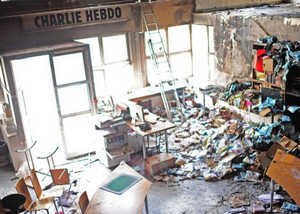
January 7, 2015 two armed men broke into the editorial office of the French weekly Charlie Hebdo and brought down fire on the staff.
12 people were killed and 11 were wounded. The law enforcement agencies of France classified the accident as a terrorist attack, responsible for which, according to the information circulating in the media, are al Qaeda and the Islamic State.
But the more one goes into details of this crime that appeared in the press, the more often one asks oneself questions, in particular — why these terrorist organizations decided to conduct the terrorist attack in France rather than elsewhere and at that particular time? And whether or not the declared aim (Islamists’ payback to cartoonists) justifies the means, and most importantly — the consequences (intensification of the struggle against radical Islam and increased attention of the security services and the society to all Muslims)?
 Perhaps what happened in Paris will trigger a larger scale events that meet more pragmatic interests than the global jihad, and obviously — of quite other international players’.
In order to understand why the expert community today asks such unusual for a visible scale of the terrorist attack questions, let’s get down to facts.
Facts are stubborn things
Analyzing the events connected with the tragedy in the editorial office of Charlie Hebdo, many experts point out the high level of “professionalism” of terrorists in its organization and conduct. In particular, attention is drawn to:
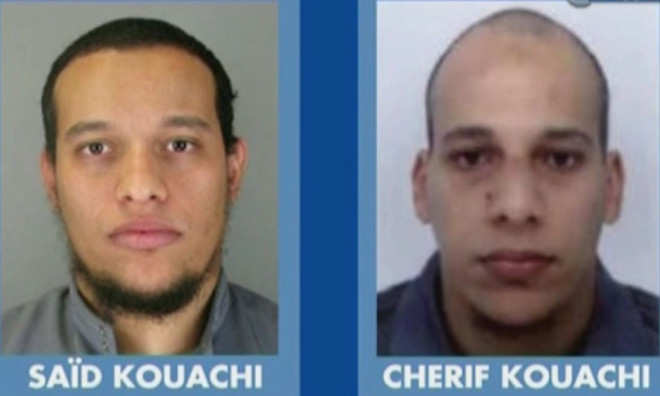 Secretive delivery to the territory of France of illegal weapons and its storage. According to published press reports, a grenade launcher and Kalashnikov guns were purchased in Brussels. Let’s think for a moment: how easy is it to smuggle into the territory of another European country two Kalashnikovs and as much as — a grenade gun?! It’s not a pistol that is easy to carry about and convenient to hide among personal belongings. This is military weapon of considerable size, with ammunition load. Besides, according to some reports, the accused of committing the terrorist act brothers Sheriff and Said Kuashi for more than 10 years had been cooperating with French security services as informants and even had fought in the war in Syria. According to some sources, Sheriff first came to the attention of the French secret services, when he created one of the most effective organizations in France to recruit volunteers to Iraq to fight against the Americans. Another representative of the Islamists, who seized with accomplices January 9 a kosher store, Ahmed Coulibaly, was a member of the network for the sale of drugs, and in 2010 was convicted of possession of automatic weapons. It would seem that the activities of such characters must draw the law enforcement and special bodies’ increased attention, and given the ubiquitous systems of control and video surveillance, looks very dubious the version of the delivery of weapons by simply idea-driven Islamists who do not have any special training or assistance from intelligence services;
Unobstructed penetration into Charlie Hebdo editorial offices. According to investigators, terrorists succeeded in penetrating the editorial offices thanks to Charlie Hebdo employee Corinne Rey. Every day she went to the kindergarten for her daughter. At this, exactly at this time there was a planning meeting at the editorial office and all the staff gathered in one place. This suggests that the attackers must have been watching the object of the attack for quite a long time, in order to choose the most suitable conditions for the attack being sure that their plans could be realized. It is worth pointing out that neither the staff of the magazine (who received repeated death threats), nor the guards patrolling the area where Charlie Hebdo office is located, had noticed suspicious activity, and this once again points to the high professionalism of the terrorists;
quickness of the terrorist attack. The whole attack with the withdrawal phase took less than 15 minutes, at this, the terrorists managed to tear loose from prosecution, literally on the run having shot a police car and finished off the wounded policeman. Just a weird accident helped the Police to get on their trail. According to media reports, in the car, first hijacked by terrorists, and after the attack on Charlie Hebdo abandoned on the outskirts of Paris, was found the identity document in the name of Said Kuashi. How can one not remember the terrorist attacks of September 11, 2001, when similarly “accidentally” were found not damaged documents of alleged “al-Qaeda terrorists”. It looks somewhat strange: terrorists, going on offense, hide behind masks, but “forget” their real passports in an abandoned car.
Based on these circumstances, many independent experts from different countries actually concurred that the attack could have been a specially planned action of unidentified security services. Moreover, it is not even a terrorist attack, and nearly flawless special operation, performed by professionals. The only unknown is the answer to the question — what the special services of the country?
Since only investigators have an access to all the facts and material evidences of the terrorist attack, we can approach the issue from the point of view of a comprehensive analysis of the consequences of the terrorist attack for the main international players. Simply put, based on an analysis of information from open sources, as well as of geopolitical interests of individual countries in the current international situation, we’ll try to answer the question: who of those who was able to carry out such a special operation, would benefit most of all?
“Cui Prodest?” or the “main” suspects”
1. Al-Qaeda, the Islamic State and other Islamists
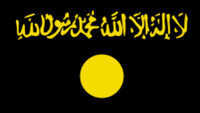 Al-Qaeda. The first official suspect. Especially after the al-Qaida leader in Yemen Nasser bin Ali al-Ansi’s video message, in which he claimed responsibility for the acts of terrorism in Paris. According to him, the controlled by him department of the organization funded the operation of the attack on the editorial offices. The Yemeni government has launched an investigation to establish the involvement of the radical group in terrorist acts on the territory of France. The television channel ABC, citing unnamed sources, immediately reported that members of the same cell of Yemeni al-Qaeda three years ago seem to have transferred 20,000 US dollars to one of the perpetrators of the attack on the editorial offices of the French satirical magazine Charlie Hebdo.
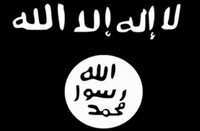 Islamic State. Suspect number two. Or maybe even number one, depending on political interests of France and changes in the world situation. The following facts point to this terrorist organization’s involvement in the terrorist attack in Paris: Ahmedi Coulibaly’s confession made during the negotiations to free hostages from the kosher shop captured by him; the so-called “Head of Imams of the Islamic State” Sheikh Abu Saad al-Ansari’s statement during his preaching in the Iraqi city of Mosul, where he said that the militants began “attacks” in France, and soon “… will turn to the UK, the USA and all the rest of it”. At the same time, he called the attack in Paris a message to all member countries of the international coalition fighting the Islamic State, as well as a response to the deaths of dozens of mujahidins because of the bombing.
Everything seems to be smoothly, but then a logical question arises: what motive do terrorists of al-Qaeda and the Islamic State have to commit such an attack?
Revenge for the cartoons? But then why to wait for so many years to carry out such a revenge? Didn’t al-Qaeda know the address of the editorial office of the magazine or home addresses of its journalists? Besides, the very reason for revenge looks doubtful — shooting for three-year-old caricatures of the Prophet Mohammed or the leader of the Islamic State. Osama bin Laden was drawn in lots of cartoons, but al-Qaeda did not kill anybody for that. And how much influence on the Muslim world could have satirical cartoons of the publication, which until 2006, when Muslim reaction to the caricatures of Mohammed attracted everyone’s attention to it, had not actually been known in Europe? How many Muslims in the world, in particular, in the same Yemen subscribe to Charlie Hebdo and speak French? Of course, you can develop this theme in the spirit of “If there are no images of Mohammed, then what can be considered a caricature” of him?” And “If Islam forbids depiction of people and animals, why do Muslims read satirical magazines?” — But even without such dwellings, it is obvious that revenge for cartoons — it’s not a good enough reason for so many efforts and risks associated with the organization and conduct of the terrorist act.
Islamists sowing panic in Europe?
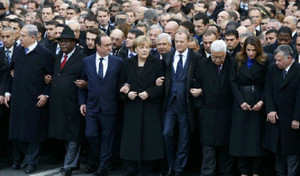 That is, the editors of Charlie Hebdo were just symbolic victims, but the true “political” goals of the terrorist attack was “to shake” the relaxed Europe. Most likely, it could have been so, but… The scale of the attack is wrong. Europe on the contrary showed unity and funeral march led by world leaders demonstrated a symbolic message of readiness to join efforts to counter terrorism in all its forms. It can be considered a trigger for serious political changes in the European environment, only under the condition that these changes had been planned anyway, the soil for them had been prepared and the attack became just a cause. But then is it really a crime — the Islamists’ initiative? After all, in fact terrorist attacks in Paris are the last thing the Islamic world needs, since they make it vulnerable to accusations by Western countries, creating conditions for another ideological justification of aggression against any Muslim country, as well as provide formal grounds and public support for the oppression of Islam in the USA and EU countries.
All these strong statements of the Yemeni cell of al Qaeda and Sheikh Abu Saad al-Ansari look no more than a cheap attempt to use a resonant case in their image purposes. Or (and this cannot be excluded either) to divert the world’s attention from real organizers by sending investigators on the wrong (but very beneficial for someone) track. In fact — it’s chase for ghosts. Especially, referring to al-Qaida, not to mention other, less well-known terrorist organizations, one should take into account a certain train of involvement in their activities of American and British intelligence services. And, frankly speaking, modern Islamic organizations today do not have enough forces and resources to carry out such an operation without help. Or do you really think that the received three years ago 20 thousand US dollars (other evidences of involvement have not been announced yet) is a sufficient sum for such a terrorist act? That is why, even if the involvement of al-Qaeda in this act of terrorism is proved, the thinking public should immediately think about the role and interests of those who could help it in performing of this terrorist act. In connection with al-Qaeda, the US intelligence services are the first to come to mind.
2. USA.
It just so happened that all suspicious incidents must undergo analysts’ check for Washington’s involvement in them. This seemingly biased attitude was formed on the basis of a really active work of US secret services, some episodes of which, becoming known due to leaks, more than once impressed the international community with the scale and cynicism.
So, the USA’s possible motives:
 opposition to anti-American forces coming to power in the EU. Recently, more pronounced has become the tendency to strengthening of anti-American positions of Euro-skeptic forces in Europe standing for their countries’ more independent from “World International” and “world policeman”’s policy. Moreover, representatives of these forces are not just represented in European and national legislative bodies, but some of them lead their countries (for example, V. Orban in Hungary or M. Zeman in the Czech Republic). In France, rapidly is increasing popularity of the far-right “National Front” and its leader Marine Le Pen, aimed at the presidency. At this, from year to year her chances and ratings only grow. The official Washington clearly understands that, in case of such an odious politician’s coming to power in France, with openly pro-Russian, and more specifically, pro-Putin, views, the USA may completely lose its positions in the EU. Moreover, the agreement on free trade area, so persistently sought by Washington, may be at threat. Extremely negative processes for the United States.
How to counteract them? To “blow up” the situation in the country, and using it as an excuse to strengthen measures to combat terrorism, — to strengthen positions of the current pro-American politicians, to “put the screws on” the undesirable, and even to accuse them of supporting terrorism through removing anti-American circles from the political process. Besides, on this wave of the terrorist attack can be used to return to the active life of the EU. In particular, attention is drawn to the fact that the attacks came shortly after Francois Hollande’s statement that there was no need of further economic sanctions against Russia, thereby blocking actually emerging shifts in the direction of the Russian-French rapprochement;
growth of the American influence in Europe. Naturally, under the slogan of deepening international cooperation to fight terrorism. Of course, in order to share the priceless experience gained by the Americans during fighting terrorism around the world. Especially in the places where there is a lot of oil;
creating conditions for involving the EU into the next war in the East. Actually, having found (or created) confirmation of the terrorists’ belonging to the al-Qaeda or the Islamic State, it is possible to dash off an information campaign to draw Europe into the next conflict in the East. So that no one dared to accuse the Americans of the practice of aggressive policy. State Department after the tragedy immediately started yelling about “Islamic terrorism”, under the pretext of fighting which the USA won Iraq (though then they themselves recognized that there is no evidence of Saddam Hussein’s participation in the organization of the September 11 attacks). This time, not only the citizens of France but those of other European countries will be more receptive to American propaganda.
In general, the above-mentioned motifs look quite convincing, especially considering the enormous experience of US secret services in execution of such operations. But in the current international situation, there are several powerful arguments pointing to a secondary character of the described above questions for the USA today, namely:
the strongest since the Cold War, worsening of relations with Russia, which demands from the United States not only ensuring of its own and its allies’ defense capability, but also focusing on strengthening its economy. It’s obviously not up to the colonization of the East, when there is a threat from the “Russian Bear”;
the US economic tiredness from the long wars in Iraq and Afghanistan (as well as the constant presence of military contingents around the world to ensure the interests of the United States);
the need to focus on addressing domestic political and economic issues, which in recent years has led to a weakening of the US activity in the international arena.
3. Russia.
A year and a half ago, the version of Russia’s possible having to do with the terrorist attack would have been seriously considered only by convinced experts-anti-Russists whose estimates are generally perceived by the public through the prism of propaganda, not analytics.
But during the 2014 Russia had made so many controversial and drastic steps, after which (though not without the participation of the Western propaganda machine) it has a reputation of the country-“sponsor of terrorism.” Today it has become a trend to look for “hand of Moscow” in various anti-Western actions and activities of political forces. The world’s media purposefully form in European countries and the USA a feeling of expecting another “portions of evil” from the Russian Federation. But, at the same time it feels somewhat awkward to deny Russia’s crucial role in the Crimean events, supporting separatists and escalation of the situation in the Donbas. Today, Russia is trying to defend its great power’s right, which determines the course of world events.
And, on this basis, the Kremlin has enough motives:
to divert the world’s attention from events in Ukraine. And, in fact, from the Russian Federation’s direct participation in the conflict in eastern Ukraine. From Russian artillery and missile systems, tanks, armored vehicles, electronic intelligence systems and suppression subunits, special forces units, infantry, as well as from hundreds of Russian “Cargo 200”. To divert attention from those who are allegedly not in Ukraine. Like they had not been in the Crimea. They had not been there until President Putin suddenly swooned with narcissistic self-enravishment decided to boast of the “polite people’s” Russian origin. Perhaps without even realizing at the time that such confession he did not frighten Europe with his omnipotence, but once again devalued the weight of his words and assurances.
At this, not just of the already spoken words, but also, importantly, of the future ones. Because the man who, after months of denying obvious things, suddenly shocked everybody with his recognition of them post factum, at this, positioning it as an achievement — such a person can’t be trusted.
But there can be very many suspicions of his implication in terrorism. Especially after the tragedy of the Malaysia Airlines passenger Flight № MH 17, shot down in the Ukrainian sky by separatists, supported by Russia, by the anti-missile system “Buk-M2”, which has, as evidenced by the recent German journalists’ investigation, Russian registration. A military man will tell you that, most likely — and with the same crew (as a yesterday’s miner simply can’t shoot from this sophisticated weapons there and then — it takes months. Months of training and exercises.
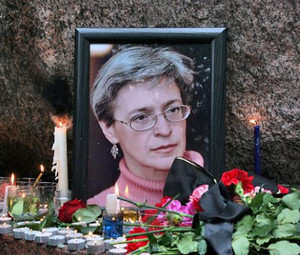 However, a bad smell of involvement in the terrorist attacks has been following Putin initially since he came to power. Apartment bombings in Moscow, Buynaksk and Volgodonsk; murder of Anna Politkovskaya and Alexandr Litvinenko, the crash of the presidential Tu-154 of Polish Air Force in Smolensk, which killed senior government and military leadership of Poland — it’s just a series of resonant events, increasingly associated with the name of Putin. The cruelty and cynicism displayed both, during the second Chechen campaign, and in methods of pressure on political opponents inside the country are Putin’s distinctive features, once again proving that their owner feels pretty comfortable, stepping over barriers of humanity under the guise of an all-consuming, “political necessity “.
Thus, the attack in one of the leading countries in Europe, participating in the “Norman format” is a pretty effective way to attract the attention of European leaders and, most importantly, — of security services of EU member states, to strengthening of internal security, rather than tracking the illegal activities of the Russian Federation in Ukraine. In this logic fits further, within a week after the terrorist attack in Paris, worsening of the situation in the east of Ukraine, due, in particular, to an attempt of pro-Russian separatists, supported by Russian troops to capture the controlled from the end of May 2014 by Ukrainian forces Donetsk airport;
to gradually destabilize the situation in Europe. This goal is more ambitious than just abstraction from the Ukrainian crisis. This is the attempt to divide the united Europe to separate ideologically alien groups, some of which, according to the plan, will turn into the sphere of the RF’s influence in the EU. The calculation is simple: European multiculturalism and the EU bureaucracy cannot quickly solve the problem of inter-ethnic conflicts (which we have been witnessing for over 10 years).
Accordingly, on the one side there is an inordinate for Europe number of representatives to the European cultures that are alien to Europe, who do not want to assimilate and form the semblance of national and cultural ghetto. On the other side — the ever-increasing mass of followers of radical right-wing views and approaches to “strangers” that have flooded Europe. With the help of enormous efforts, the authorities of European countries manage to maintain a balance in the relationship between the two groups. At this, the main stabilizing factor is that most of the European population in their views adheres to the middle, and focuses on socio-economic problems, rather than on ethnic ones. But the whole construction is very shaky and is sensitive to the effects of the outside. Suffice it to a series of attacks on religious/ethnic ground, first against Muslims, then against Christians, pushing them to mutual destruction and a chain reaction of division into “friend-or-foe” will start in this stabilizing “median” mass. And then Europe risks to plunge into new “Middle Ages”, with their “crusades”. In this situation, Russia will be a much more ideologically close partner, at this, having already the experience of struggle against the radical Islamism’s “universal evil”;
to weaken/lift sanctions against Russia through the development of cooperation in the fight against terrorism. This is the straw grasping which Russia hopes without any progress in the “Ukrainian question” to reestablish relations with the EU. Actually, for this it just should not mess things up in the Donbas and imitate active implementation of Minsk agreements. And that’s all. But in response to the “incomparable contributions” of the Russian Federation into the question of international security and the fight against terrorism, a part of the sanctions can be lifted, allegedly because of the need to ensure effective cooperation. But, as it is typical of the EU, for decency they would express “deep concern” about the situation in the Donbas. Full lifting of sanctions by the EU is not expected, at least not under the current leadership, but the Crimea, most likely will be forgotten for some time;
to support the right-wing forces, Euro-skeptics and nationalists. Not only political analysts, but just interested in international politics readers are well aware of Russia’s active support in the EU of all the opposing the “united Europe” forces and movements, traditionally belonging to the extreme right. And the attacks in Paris can rightly be regarded as a special operation of the Kremlin in order to radicalize the situation in France and Europe, in order to give a hand to right-wing nationalists.
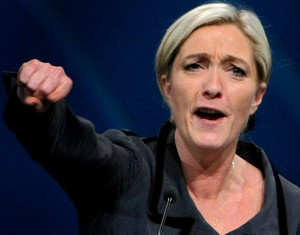 Especially that one of the most influential European far-right parties today is precisely in France — Marine Le Pen’s “National Front”. She, by the way, is a permanent candidate for the presidency of France (in the elections in 2012, Marine Le Pen won 17.9 % of the votes and was in the third place). Today, the “National Front” has a fairly high degree of support in the French society. Thus, May 25, 2014, this ultra-right political force celebrated the victory in the elections to the European Parliament in France, having gained 25.4 % of the vote! Now France is shaken by the attacks on ethnic or religious grounds, evoking racial hostility, and in case of recurrence of such incidents (even in other EU countries) — blatant racial hatred too. Marine Le Pen, immediately took advantage of the “information cause” and has already started her campaign, accusing the Socialists of underestimating the threat of terrorist attacks to Paris, promising, if she comes to power, to increase spending on the army and police, and at the same time stressing that she is allegedly supported by 30 % of the French. Taking into consideration the fact that the next presidential election in France is planned for 2017, Marine Le Pen has a resource not of time, but of the Kremlin’s strong support, both political and financial (in the form of a perpetual loan of EUR 9 million issued by the First Czech-Russian bank).
Characteristically, Le Pen’s family for many years has had warm relations with certain circles in the Russian government. The French far-rights’ leader herself has repeatedly admired Russian President Vladimir Putin and said that France and Russia should be allies in a common struggle against the United States’ dictate. At this, she has repeatedly stated that France needs the same strong hand, which Russia has gained in Putin’s. In the light of recent events it is noteworthy that representatives of the “National Front” were observers at the “referendum” in the Crimea and the Donbas, confirming their “legitimacy”, and Marine Le Pen herself is of the opinion that “… in the Ukrainian crisis, Putin behaved cleverly and skillfully, while Europeans allowed Americans to manipulate them”.
The above-mentioned reasons are enhanced by another one. Personal reasons:
Putin’s payback to Hollande. And here from the known — a whole range of reasons: for France’s position in relation to Ukraine; for the imposed sanctions and lack of support in the EU and the UN; for humiliating for Putin use of the promised to Russia “Mistrals”. Of course, this factor alone is not significant enough for organization of a terrorist attack, but with all the previous ones — it could have played a decisive role of the “last straw”.
Moreover, Russia is the only “suspect”, for which we can’t find a realistic answer to the question: “And what are the arguments against the terrorist act?” Moral principles in Putin’s case — no limits, reputational risks, if suddenly the evidence of the involvement is found — are potentially great (against the background of the badly enough tarnished reputation of the country), but taking into consideration the virtual impossibility of finding such evidence — are actually not great, as compared with the expected benefits. The RF’s foreign policy interests once again confirm the Kremlin’s being interested in such an incident.
So, on the basis of the above-mentioned, it is hard to deny presence of a set of weighty motives.
But was it possible for Russia to organize the attack?
Theoretically, yes, it was. In open resources there periodically appears information about the Russian secret services’ having to do with both, the Islamic State (including participation in the fighting of Russian special forces on the side of the Islamic State), and individual cells of al-Qaeda, other Islamist organizations, including through Ramzan Kadyrov’s (controlled by Putin) channels. Representatives of the power structures of the Russian Federation do not deny Shamil Basayev, Ruslan Gelaev and some other future leaders of Chechen terrorists’ going through some special training under the wing of the Main Intelligence Directorate of the General Staff of the RF. It is possible that in the Islamic terrorist underground, there continue their work other, more faithful to Russia, graduates of these “courses” ready, like Kadyrov, “to execute any order of the Supreme Commander”. In this context, a very remarkable is the information about the arrest in the French city of Beziers of five Russians of Chechen origin suspected of preparing a terrorist attack. No less notable in this case is the almost complete absence of further information about the incident.
The fact that particular performers (although, frankly speaking, it is not known whether killed terrorists were those who had conducted the attack in Charlie Hebdo?) are natives of France, and seemingly are not connected with Russia, does not really prove anything: using “blindfold” has always been one of traditional methods of intelligence work.
4. Other possible “suspects”
Analysis of other potential parties involved in the terrorist attack is close to conspiracy, but, nevertheless, these versions have to be considered, at least for the sake of more balanced seeing the factors that could influence the situation.
France. The President of France, with his low popularity in the society, decided in such a way to raise his ratings, as well as under the pretext of strengthening security measures — to get additional tools of influence on opponents. Because of these attacks, intelligence agencies of France and the European Union will receive additional financial resources and powers. Accordingly, the leadership will feel more confident. Interestingly, Francois Hollande pretty quickly arrived at the site of the terrorist attack (within about 10 minutes), despite the high threats to his safety in such a situation: there could have been explosive devices or other terrorists nearby.
United Kingdom. Possible objective — to prevent creation of the free trade area between the EU and the United States, making impossible the idea of the alternative to dollar currency areas and the decisive role of the British financial system in them. This carries a risk of fall of London’s importance as a global financial center that actually strikes the British financial system.
Israel. What for? To get support in the fight against “global Islamic terrorism”, which for Tel Aviv has traditionally been located in the Palestinian territories. It should be noted that in France there was a fairly strong pro-Palestinian sentiment. Against this background, symbolic looks the additional attack against a kosher store.
China. In response to Ukraine’s being drawn into Europe. And another driving China out of the most important for it European projects (as it was in the “Arab Spring” countries). Besides, the Europeans’ “taking away” Ukraine from China can be regarded as an action directed against the nurtured by the Chinese leadership project of building a new Silk Road.
Ukraine. To later blame the hated Russia for everything.
Instead of conclusions.
In the situation of limited official information, to build conclusions is very ungrateful, since any new-found evidence can cross even the most coherent theory. Anyway, this article is not an investigation, so — it does not state who is guilty.
The aim of this publication is to analyze possible motives and risks for major players in international politics, and as a result — to form the basis for estimation of new emerging details of the terrorist attacks in France, and of subsequent changes in the policies of the mentioned countries. After all, most estimates of the tragic events in Paris come exclusively from the tiny set of facts publicized and often are reduced to finger-pointing — this is to blame, or that. At the same time it is impossible to consider such events that have led to such a significant international resonance, outside the context of the current international situation and its mainstream.
The proposed article is only a help for a deeper analysis and expert discussions, the results of which may become more ambitious and at the same time a profound vision of a new, just emerging world policy.

